What You Need to Know
- 🖼️ Aphantasia is a rare condition affecting approximately 1-3% of the population, characterized by the inability to voluntarily create mental images.
- 📚 Individuals with aphantasia might struggle with tasks requiring mental visualization, yet often develop unique strategies to compensate using other cognitive strengths.
- 🎨 Creativity thrives in surprising ways among those with aphantasia, who often rely on sound, touch, and logic rather than visual imagery.
- 🧠 Research into aphantasia provides insights into the complexities of the mind, showing that the absence of internal imagery does not equal a lack of understanding or empathy.
- 💡 People with aphantasia employ strategies such as verbal memorization and detailed note-taking, proving that adaptation is key to navigating life without mental images.
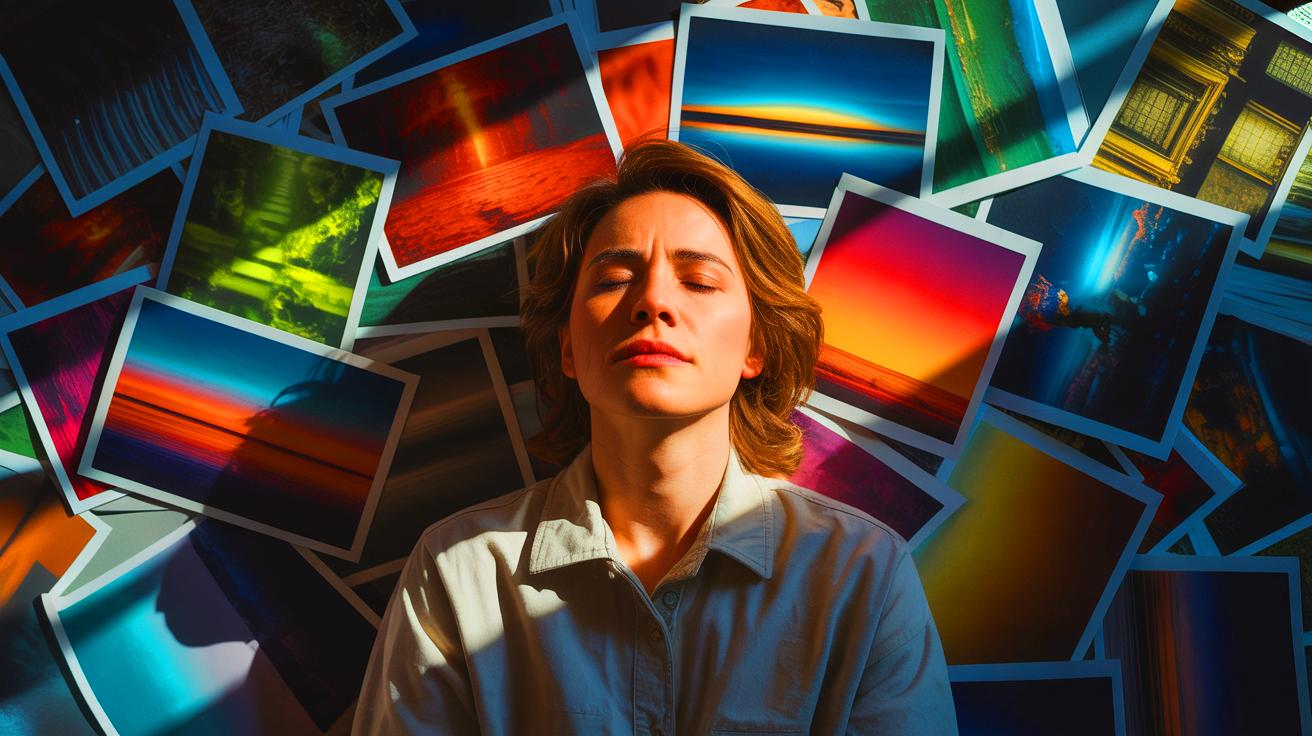
The kaleidoscope of the human mind is a mystery; it’s a canvas for imagination, where vibrant dreams are painted. Yet, imagine a world where this canvas is blank, a mind without pictures. For some individuals, this is reality. They live with a rare condition known as aphantasia, where the ability to visualize is absent. As readers, we can close our eyes and conjure up images of a loved one or vividly recall our favorite places. Those with aphantasia can’t. This condition challenges our understanding of how the mind works and how pivotal visualization is to our identity and experiences.
Understanding Aphantasia
Aphantasia, a term coined in 2015 by Professor Adam Zeman, refers to the inability to voluntarily create mental images. This phenomenon affects approximately 1-3% of the population, who find themselves unable to summon images in their mind’s eye. As simple as it might seem, experiencing aphantasia is akin to living in a mental world devoid of pictures, something that most of us take for granted.
People with aphantasia might find it difficult to picture the face of a loved one or visualize a past vacation. This condition can significantly impact on one’s memory and creativity since the mind’s images often serve as anchors for retaining and processing information. However, individuals with aphantasia often develop unique ways to compensate for visual deficits, leaning on logic and other senses to navigate their world.
The Impact on Everyday Life
For those of us who can see images within our minds, it might be difficult to grasp the impact of aphantasia on day-to-day activities and emotional experiences. Without mental imagery, recollecting personal memories relies heavily on facts and words, not pictures. This aspect can affect both personal relationships and emotional depth.
Many people with aphantasia may not initially know their experience is different from the norm until they have a conversation with someone who vividly describes mental images. Imagine relying solely on verbal descriptions or knowledge-based truths to remember your child’s face. While it might sound challenging, individuals adapt by leveraging other strengths.
Embracing Creativity Without Images
One might wonder how creativity thrives in the minds of those with aphantasia. Contrary to what is assumed, creativity can bloom in unexpected ways. Many notable artists, composers, and writers flourish creatively despite (or possibly because of) their inability to visualize.
Aphantasics might use sound, touch, and logic as tools for creative expression. In fact, some studies indicate that aphantasia might lead to enhanced abstract problem-solving skills. Creativity is as much about innovation and thinking outside the box as it is about visualizing outcomes, proving that profound personal boundaries do not necessarily hinder brilliance.
Coping Strategies and Living Fully
What are the strategies someone with aphantasia might employ to navigate life? While the challenges are unique, so too are the ways individuals manage them. From using verbal memorization techniques to relying heavily on written records and notes, adaptation becomes second nature for those with this condition.
These strategies can be summarized into several useful methods:
- Utilizing word associations instead of imagery.
- Relying on audible cues or mnemonic devices.
- Keeping detailed written records for reference.
Moreover, understanding and acceptance from family and friends can make a significant difference, providing more empathetic and supportive environments.
The Science of Visualization: Why It Matters
Visualization plays a remarkable role in cognitive processes such as memory formation, decision-making, and innovation. At the neural level, seeing with the mind relies on the intricate workings of the brain’s visual cortex. But what happens when this ability is absent, as in aphantasia?
Research is still uncovering how brain structures and connectivity differ in those with aphantasia compared to those who visualize vividly. What is clear is that the absence of internal imagery does not equate to an absence of understanding or empathy. These individuals continue to explore the boundaries of perception and cognition, offering invaluable insights into the complexities of the human mind.
Exploring the nuances of aphantasia leaves us pondering the diversity of human experience. While some people live without the ability to visualize, their lives can be just as rich and profound. This condition challenges our understanding of creativity and reality and offers an opportunity to reflect on how we perceive the world around us. If you suddenly found yourself unable to call upon mental images, how would you navigate life differently?
Wow! This is mind-blowing! How do they even dream? 🤔
Interesting article. Never heard of this condition before. Thanks for sharing!
How do people with aphantasia remember things?
This condition must make storytelling a bit harder, huh?
Wait, does aphantasia affect dreaming at night as well?
I can’t imagine living like that – pun intended! 😄
How was this condition discovered?
As someone who struggles with visualization, this hits home!
I’m curious, can aphantasia be treated or improved?
How do people with aphantasia experience reading novels or watching movies?
Is aphantasia related to any other cognitive conditions?
Does aphantasia affect the ability to recognize faces?
I bet people with aphantasia are amazing at remembering facts!
Learning about this makes me appreciate my visualization abilities more.
Can aphantasia be genetic?
Impressive how people adapt! Creativity really knows no bounds. 😊
Can this be diagnosed in children or only adults?
Does having aphantasia impact one’s sense of direction?
My mind is blown. I genuinely had no idear this was a thing.
Is there a spectrum for aphantasia, or is it all or nothing?
How do artists with aphantasia create such amazing work?
Surely, technology like VR would have a different impact on them?
Is there a particular demographic more affected by aphantasia?
People with aphantasia must have incredible auditory skills!
This makes me wonder what percentage of the population is hyperphantasic!
Are there specific tasks where they excel compared to visual thinkers?
This condition sounds like something straight out of science fiction. 😮
Do people with aphantasia feel left out in visual-centric conversations?
What’s the most challenging thing for someone with aphantasia?
I’d love to hear more about their unique compensatory strategies.
Does aphantasia influence emotional experiences?
It’s fascinating how so many scientists study this condition.
I’m guessing learning new languages without visualization must be interesting!
How could educators better support students with aphantasia?
The depth of human experience never ceases to amaze me.
Can one willingly induce aphantasia, or is it purely innate?
Is aphantasia recognized in the DSM or other medical manuals?
Imagine living a lifetime without mental images… or better yet, don’t! 😂
Are there any famous historical figures suspected to have had aphantasia?
Is there a connection between aphantasia and synesthesia?
Do people with aphantasia differ in their taste in art?
Do those with aphantasia experience PTSD differently without images?
This just proves that the brain is a wild, wonderful mystery.
I find it heartwarming that empathy isn’t tied to visualization.
Has virtual reality technology been used to aid those with aphantasia?
I wonder what day-to-day life feels like for them. 🤔
Do people with aphantasia tend to prefer more abstract creative outlets?
Are there exercises to enhance visualization or manage aphantasia better?
Could aphantasia offer advantages in certain professional fields?
How has Hollywood tackled this topic and portrayed it on screen?
The brain’s adaptability never ceases to amaze. 😍
Does aphantasia affect the understanding of metaphors and symbols?
How do people with aphantasia describe color if they can’t visualize?
What role does imagination play in their dreams? Do they even dream?
I had no idea aphantasia was even a thing until now.
I find the compensatory strategies fascinating. You never know what humans can adapt to!
How do folks with this condition interact with virtual and augmented realities?
I always imagined everyone could visualize like me – shows what I know!
Are there any meetings of communities based on shared perception types?
Emailing this to a friend who experiences aphantasia. She’ll find it interesting!
Any links between aphantasia and memory recall problems?
This was a really enlightening read, thank you!
Do people with aphantasia find digital art more appealing than traditional art?
I’ve always known I had a weak mind’s eye but not to this extent. 🤓
Imagination plays such a huge role in innovation. This changes everything!
Can mindfulness or meditation techniques help improve visualization?
I’d love to know more about how relationships are affected by this.
Does this mean they have better control over their thought processes?
What’s it like emotionally without the power to picture mental imagery?
Are there foods or nutrients that help improve visualization abilities?
Thanks for such a detailed post! Truly eye-opening stuff! 😊
How about aphantasia’s effect on spatial awareness?
This idea makes me so grateful for my vivid imagination.
I wonder if those with aphantasia might excel in fields like mathematics.
Imagine attending a guided visualization session without the ability to visualize! 😄
Does technology offer new opportunities or tools for aphantasia sufferers?
Just curious, what percentage of people have the opposite condition, hyperphantasia?
I love learning about rare conditions. Makes life feel more diverse.
How do individuals with aphantasia fare in jobs requiring creativity?
Has aphantasia always existed, yet gone unnoticed until recent studies?
This sure puts another spin on the phrase “think outside the box”!
Can individuals experience partial aphantasia where they visualize some things but not others?
Is aphantasia linked with specific patterns in brain activity?
How do partners of those with aphantasia adjust to their experience?
Reading through these comments, there’s so much to ponder about the human brain!
Can upbringing or environment influence the degree of aphantasia experienced?
Did researchers only recently start exploring this fascinating area?
Do people with aphantasia see their childhood differently than others? 🤔
Is there a relationship between visual challenges and aphantasia?
I’m guessing video games might be both challenging and intriguing for them?
This topic sparked a great conversation with my friends. Thanks!
Would meditation with visualization techniques appear fruitless to sufferers?
It’s fascinating how brains rewire to cope with such conditions! 😊
How do individuals with aphantasia describe their experience of the world?
I’d love to see a documentary exploring individual stories of aphantasia.
Never thought I’d hear of an inability to imagine. How interesting!
Is aphantasia homogenous or are there varying types or levels?
Does having aphantasia change how one perceives physical spaces?
I find it intriguing how diverse human experiences can be!
Can people spontaneously develop aphantasia due to trauma or brain injury?
How might society better support people who experience the world this way?
Incredible to think how adaptable the human mind truly is. 😍
Wondering how VR experiences might feel or offer insights to them.
How does aphantasia influence other creative endeavors like music?
For those without it, this can sound both unimaginable and enlightening.
I truly appreciate this deep dive into such a little-known condition.
What do psychological models say about how they process emotions?
I can’t fathom not having mental pictures. Changing perspective! 🤔
How about future research opportunities related to this field?
As someone who struggles with visual learning, I find this fascinating!
Does language acquisition vary for individuals affected by aphantasia?
Always eager to learn about brain quirks. Thanks for this!
Thrilled to dive into stories of people who’ve navigated life differently! 😃
Is having dreams without visuals a thing with this condition?
What about the emotional impact on people with aphantasia – any studies?
Can neurology or psychology offer treatment options in the future?