What You Need to Know
- ✨ Seeing stars during the day can be explained by sudden changes in blood flow or pressure, impacting the retina and causing it to perceive light where there is none.
- 🔄 The visual sensation of phosphenes is linked to oxygen levels reaching the eyes, with fluctuations triggering these visual signals.
- ⚠️ Persistent visual disturbances may indicate underlying health issues, especially if accompanied by symptoms like dizziness or headaches. Monitoring these signs can aid in addressing potential concerns.
- 💡 Making lifestyle adjustments like proper hydration, gradual posture changes, and a balanced diet can help mitigate the occurrence of seeing stars.
- 🧐 Our eyes provide clues to our internal health, making it important to understand the reasons behind seemingly strange phenomena like seeing stars, which highlight the complex communication systems within our bodies.
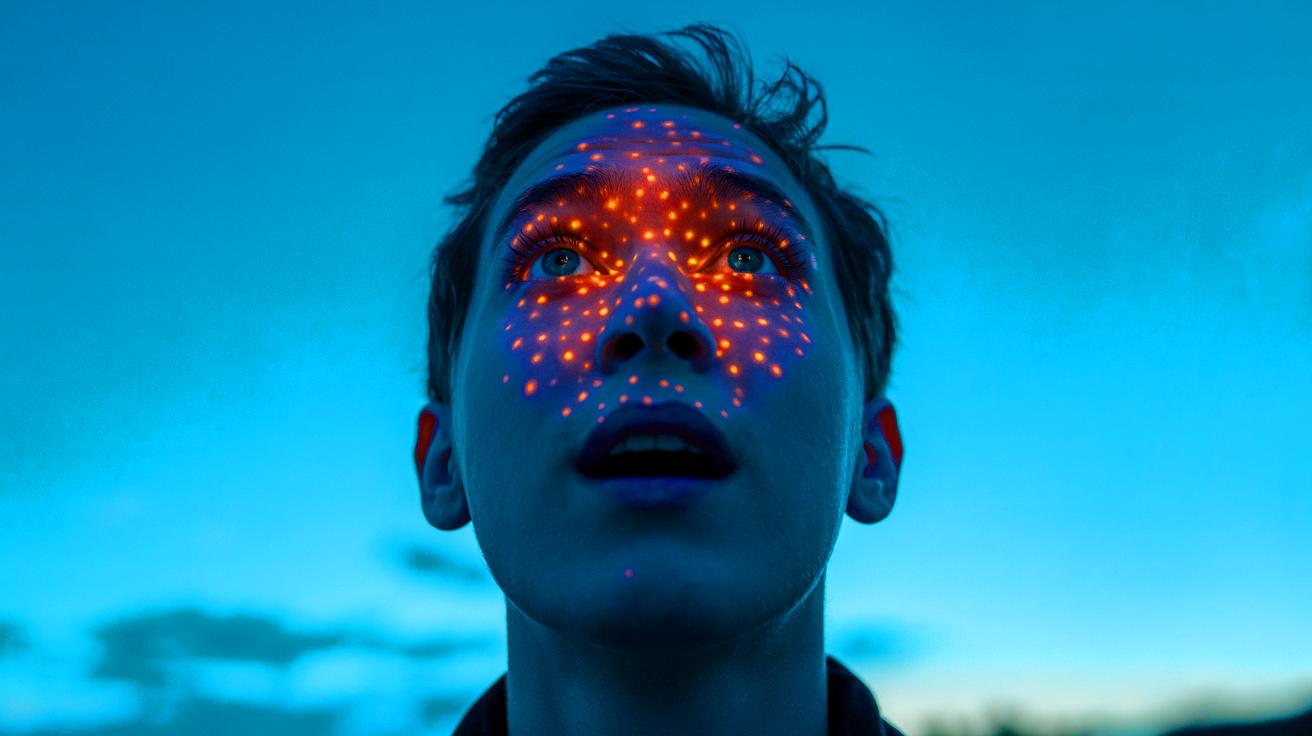
Have you ever enjoyed a bright sunny day, only to suddenly find yourself momentarily blinded by tiny white sparkles dancing before your eyes? This familiar phenomenon, often characterized as “seeing stars,” is more than just an odd quirk of nature and isn’t confined to stargazing beneath the night sky. What causes these erratic glimmers and are they a reason for concern? From understanding the relationship with oxygen levels to unraveling the science of light, let’s embark on an enlightening journey to uncover why we’re sometimes treated to a celestial show, even with our feet firmly planted on the ground.
The Phenomenon Explained: Why Do We See Stars?
Seeing stars during the day might seem like a trick of the mind, but there’s solid science behind it. This intriguing phenomenon is often linked to the eye’s response to sudden, unexpected changes in blood flow or pressure, leading to the stimulation of the retina. When pressure is applied to the eyes—say, you rub them or get up too quickly—the cells in the retina perceive this physical force as light. That’s why you see flashes or spots dancing in your field of vision. This isn’t optical illusion, but a complex interplay of biology and physics. It’s the brain interpreting signals from the retina as light, even when the light is absent.
However, it’s not only mechanical force that triggers this. Episodes of low oxygen levels can also spur such visual displays. Known as phosphenes, these flickers are more common than you might think and generally aren’t harmful. Though disconcerting, they offer a marvellous insight into how our bodies communicate internal conditions through visual cues.
Links Between Oxygen and Visual Perception
The bond between oxygen levels and our visual experience often goes unnoticed, only becoming apparent during specific scenarios. When oxygen supply to the eyes falls below optimal levels—think about standing up suddenly or during intense physical exertion—this can result in a drop in central retinal artery flow. The retina, highly sensitive to oxygen levels, reacts by sending signals to the brain that are perceived as stars or bright spots.
Low oxygen levels prompt the release of psychochemical signals that impact neural pathways leading to the eye. The retina’s response to these fluctuations underscores its role as a barometer for detecting changes in bodily oxygenation. Interestingly, this underlines the eyes’ remarkable sensitivity to the slightest physiological shifts, a testament to the intricate ways in which our senses are intertwined with bodily functions.
When to Pay Attention: Understanding the Signs
While seeing stars occasionally is harmless, persistency or accompanying symptoms like dizziness, headaches, or vision changes could be indicative of underlying issues. These could range from cardiovascular irregularities to retinal problems. It’s crucial to monitor the frequency and circumstances under which you experience this sensation.
Here’s when you should consider consulting a medical professional:
- If visual disturbances are frequent and unexplained.
- When they are coupled with other symptoms like severe headaches, nausea, or fainting.
- If they interfere with your daily activities or persist even after adjustments like hydration or rest.
Awareness, coupled with medical guidance, can transform these unexpected visual cues into opportunities for healthier living.
What You Can Do: Tips to Mitigate the Experience
To minimize the chance of seeing stars, consider making certain lifestyle adjustments. Hydration is crucial; dehydration can exacerbate the likelihood of such disturbances by affecting blood pressure and circulation. Ensuring regular, moderate physical activity also helps sustain proper blood flow and pressure.
Practicing gentle rises from seated or lying positions prevents sudden drops in blood pressure. Nutritionally, integrate foods rich in omega-3 fatty acids and antioxidants found in leafy greens and fish to support retinal health. These forays into diet and lifestyle modify the conditions impacting your eyes and overall well-being, illustrating you can play an active role in mitigating this seemingly whimsical phenomenon.
Often we dismiss seeing stars in our eyes as an inconsequential oddity or write it off to our imagination. Yet, these visual bursts bear insights into our body’s unique communications systems. By understanding the science of how our eyes interact with oxygen and blood flow, we unlock the ability to read our internal health signals more carefully. Isn’t it fascinating how our eyes offer glimpses into our inner workings? What other phenomena do you think hold undiscovered secrets awaiting illumination?
Wow, I always thought seeing stars was just from standing up too quickly!
Does this mean I should be worried if I see stars all the time? 🤔
This is fascinating! Science never ceases to amaze me. Thanks for sharing!
I remember seeing stars last time I went jogging, now I know why!
Could low oxygen levels mean I need to exercise more?
Loved the explanation, but it sounds a bit sci-fi to me! 😄
Seeing stars sounds scarier now that I know it’s linked to oxygen and blood flow!
What other visual phenomena are similar to this?
This post just blew my mind! I didn’t expect it to be biology-related.
How many stars are we talking here? 😂
Thanks for breaking down such a strange experience into simple terms.
I had no idea hydration could affect this. Time to drink more water!
Very informative post. It’s good to be aware of health indicators like these.
So, the next time I see stars, I’ll remember: stay calm and hydrate.
Interesting perspective on the body’s internal communication systems.
Can stress or anxiety also cause you to see stars?
Looks like it’s time to include more fish in my diet.
Seeing stars seems like your body’s way of saying, “pay attention!” 🧐
I had no clue that seeing stars wasn’t just a cliché!
I’m still not sure if I understand; why is oxygen so important here?
Let’s hope seeing stars isn’t a sign of bigger problems for me.
Do astronauts see stars differently because of oxygen levels? 🤔
The intricacy of the human body never fails to disappoint!
I think I should stand up more slowly from now on. 😅
This is a nice reminder to avoid quick movements when I wake up!
So eating healthier can prevent me from seeing stars? Nice!
Thanks for this, very interesting. Does this mean I shouldn’t ignore it?
Reading this makes me appreciate how complex our eyes are.
Has anyone else experienced seeing stars during a workout?
This article made me aware of how connected everything is within us.
I’ll definitely be watching my symptoms more closely after this! 😊
The balance of biology and physics is truly fascinating!
I’ve always wondered! Proper diet and hydration sound like key takeaways.
What other strange eye phenomena are there besides seeing stars?
I’m going to monitor how often I see stars now… might keep a journal!
You could almost say it’s like a cosmic light show! ✨
Guess I’ll take it easy next time I transition from sitting to standing.
Helpful post, I’ll be more cautious when I start seeing stars!
Never thought seeing stars could be so scientific. Kudos!
My granny used to call it fairy dust—turns out it’s oxygen! 😄
Would love to see an infographic explaining this further, please.
This explains a lot about similar experiences I’ve had growing up.
For someone who sees stars regularly, should I be consulting a doctor?
Always thought I was just dizzy lol, thanks for enlightening me!
Is this phenomenon common in children, or does it affect adults more?
Pretty surprised to learn stars have little to do with space in this topic!
Does anyone know if meditation helps with seeing stars?
This article makes my eyes feel so much more intelligent! 👀
Almost like magic! But now I know there’s a science to it. 😊
Thank you for sharing this, it’s quite enlightening!
Who knew such a normal occurrence could have so much biology behind it?
Feeling grateful for the complex systems within our bodies after reading.
The blood pressure connection makes a lot of sense, thanks for explaining!
Yup, seeing stars sure does require attention and understanding. 🤔
My eye doctor never explained it like this. Super interesting!
The phrase ‘seeing stars’ has a whole new meaning for me now.
We live in a walking chemistry lab! Who would have thought?
Should I be cutting down caffeine then, since it affects blood pressure?
Can’t believe I thought it was a brain issue, thanks for clearing that up!
Glad to see I’m not seeing stars because of lack of sleep alone, it’s much more.
Have you ever written about optical illusions and how they work?
I always feel like it’s a party when I see those twinkling lights! 😂
Really good read, it felt like a mini science lesson. Thank you!
Those shimmering moments seem less trivial now… 🤔
This is neat! A reminder that low oxygen is quite impactful yet subtle.
Does this affect animals too, like dogs or cats maybe?
Super intrigued whether this links to migraines or other pains.
Should I wear sunglasses if I see stars constantly in daylight?
The human body just seems like a really well-thought-out machine!
I’m definitely thinking more about how circulation affects my eyesight now.
Could this be mistaken for any disorders, like epilepsy?
Isn’t it insane how many signals our body sends without us knowing?
So, if I take care of my heart, I might stop seeing stars?
Funny feeling stars can be so much more than a Hollywood dream! 😝
It’s always incredible to learn about the everyday phenomena around us.
Are there any specific exercises that help with improving circulation?
Now, when I see stars, I’ll think about dietary changes, not just magic! 😊
Who else here realizes it’s like our body’s little light show? 🌟
I’ll be sure to remember this next time I see stars without rubbing my eyes.
Did anyone else here find the oxygen link surprising?
Should we be doing regular eye check-ups even if we just see stars once?
I found this surprisingly comforting, knowing it’s frequently harmless.
Time to track how often I’m dazzled by those sudden little lights!
My grandmother used to say “the fairies are out” when she saw stars. 🌟
Could altitude have an impact on seeing stars, like while flying?
I never knew that ‘seeing stars’ could be so literal scientifically!
So this what happens when I jiggle my eyes side to side rapidly? 😂
Will wearing eye protection help reduce these ‘seeing stars’ episodes?
I bet doctors must find this kind of science fascinating too!
Lessons like this make me appreciate what goes on unnoticed in our bodies.
Do nutritional supplements play any role in curbing this phenomenon?
This would make a great topic for a school science project!
Seeing stars the sophisticated way—turns out the stars aren’t in my head! 🤓
I don’t know whether to be excited or perplexed right now haha!
Is it possible to train the brain to react differently to low oxygen levels?
Do deep-sea divers experience this differently, given their oxygen supplies?
Can anyone recommend naturally rich omega-3 foods for eye health?
Feeling those magical starbursts in the eyes feels less mystical now. 😊
I’d read somewhere it’s because of dehydration. This makes better sense now.
This explains my post-run dazzles! Time to slow down and hydrate better.
Thanks! Clarifies a lot of questions I didn’t know I had on eye phenomena.
For those who see stars frequently, how’ve you coped or adjusted?
Are there any gadgets that help monitor eye health linked to oxygen levels?
Trying not to overthink now that I know my retina plays tricks on me. 😅
I had no idea our retinas could be so sensitive and insightful!
What’s the next visual phenomenon you’ll unravel? Can’t wait. 😊
Really insightful, I’ll sound super informed next time it comes up in conversation!
This humble post proves there’s always more to learn about ourselves.
If it’s all because of blood flow, should we prioritize daily exercise?
Amazing how the smallest things can influence our perception so vividly.
Consider me enlightened; now to get family back on board with health tips!
The connection to low oxygen is kind of like our body’s own alert system. 🤔
Let’s hope my see-stars moment in meetings isn’t major destiny beckoning… 😄
Delightful to uncover that what we casually see can have layers of explanation!
Will practicing breathing exercises help to stabilize eye experiences like this?
Definitly bookmarking this to share the wisdom next time a friend sees stars!