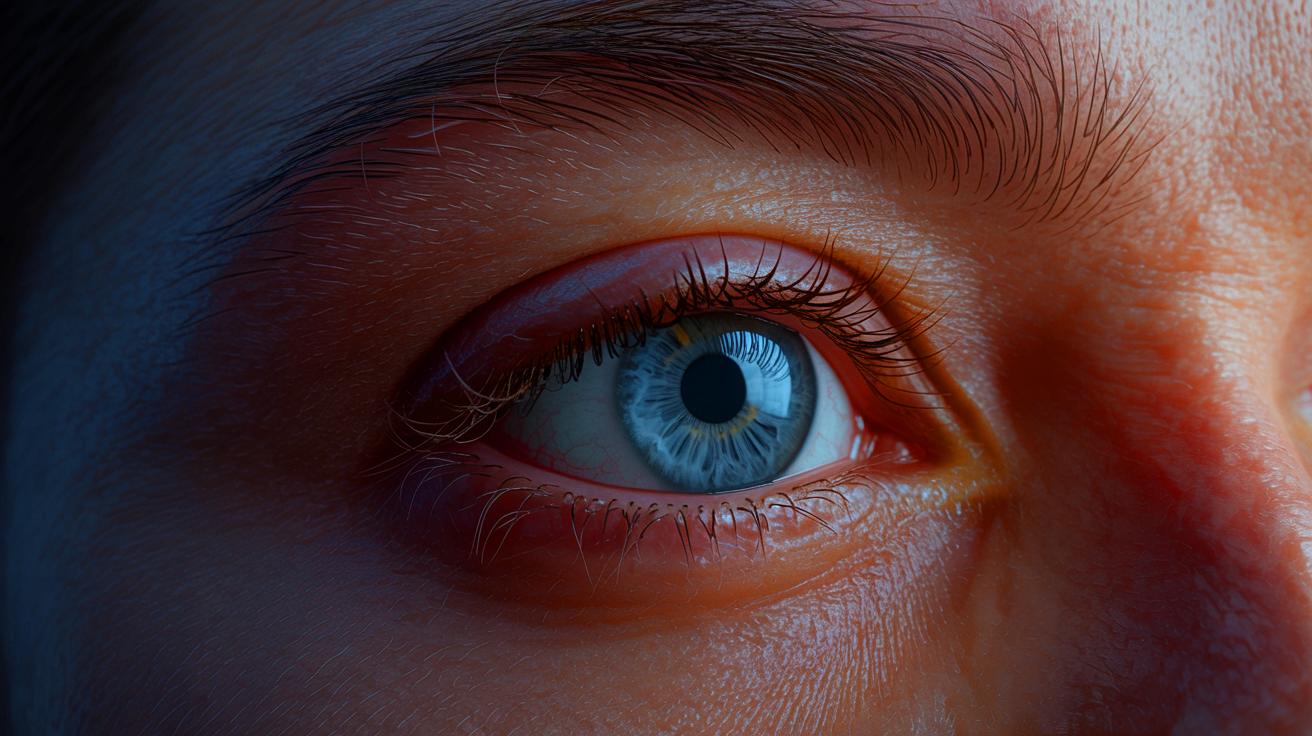
What You Need to Know
- 🔒 Blinking acts as a protective shield for the eyes, minimizing damage from dust, debris, and dryness by distributing moisture.
- 🧠 Strategic blinking provides mini mental breaks, aiding concentration and cognitive performance by allowing the brain to process information efficiently.
- 😧 Changes in blink rate can serve as emotional indicators, signaling stress or anxiety, and providing insights into our emotional health.
- 🤝 Synchronized blinking enhances social connections, enriching conversations and increasing mutual understanding through non-verbal cues.
- 🩺 Monitoring blink patterns can reveal hidden health clues, potentially signaling neurological or endocrine disorders and supporting early diagnosis.
Blinking is one of life’s most common and often overlooked actions. We blink without thinking, yet each flutter has a purpose. This seemingly simple reflex is crucial, not only for maintaining optimal eye health but also for affecting our concentration and overall well-being. What if every time we blinked, we were engaging in a powerful mechanism that could impact how we perceive the world? Let’s explore the hidden roles blinking plays in our everyday lives, and uncover why these brief moments of darkness are more than they seem.
The Protective Shield
The first and most obvious role of blinking is to protect our eyes from harm. Every blink acts like the closing of a curtain, forming a protective barrier that shields our eyes from dust, debris, and other potential irritants. This automatic defense mechanism is crucial, especially in environments filled with airborne particles. What many don’t realize is that blinking also distributes a fresh layer of tears across the surface of the eye. This keeps the eyes moist, reducing dryness and irritation, which are common complaints in today’s digitally dominated world.
Without this essential moisture, the eyes would become vulnerable to a host of issues, from simple redness and itching to more severe conditions like corneal abrasions. Blinking not only refreshes and protects but also rejuvenates our vision by providing a brief moment of rest, allowing our visual focus to remain sharp and precise. A simple blink indeed guards our windows to the world.
An Aid to Concentration
Beyond protection, blinking plays a surprising yet pivotal role in boosting our concentration. When we are deeply engaged in an activity, whether it’s reading an absorbing book or losing ourselves in a captivating film, our blink rate tends to decrease. This phenomenon occurs because our brain is trying to minimize interruptions. However, strategic blinking can actually enhance cognitive performance. Each blink gives our brains a split second to process and organize information, acting as a mental break.
Researchers have found that these milliseconds of rest are essential for maintaining focus and preventing mental fatigue. The pause provided by a blink might even aid in problem-solving, by letting our subconscious work on complex information while temporarily shifting our attention. Such a simple reflex appears to be more entwined with our cognitive functions than we could have imagined.
Emotional Indicators
Blinking is not just a mechanical action; it also functions as a subtle emotional barometer. Have you ever noticed how rapidly someone blinks during a tense situation or when they are feeling stressed? Our blink rates often increase when we experience heightened emotions, serving as an involuntary signal of our internal state. Crucially, changes in blinking patterns can be telling indicators of emotional health. Anxiety, stress, and even the medication we take can influence how often we blink.
Being aware of these cues can offer valuable insights into our own emotional well-being and that of others. Recognizing an increase in blink rate might prompt us to check in with our feelings, offering a chance to address underlying concerns before they escalate. So, blinking not only communicates safety and focus but also sends out silent messages about how we truly feel.
Synchronizing with Others
Human interaction is filled with subtle signals, and blinking is a part of that dance. In conversations, synchronized blinking can indicate rapport and mutual understanding. When engaged in dialogues, we naturally fall into a pattern, often mirroring each other’s blinks, which strengthens social connections. Just like the rhythm in a good conversation, this form of non-verbal communication fosters a sense of harmony and agreement.
- Blink rate synchronization enhances connection.
- Mirrored blinks can boost trust and understanding.
- Non-verbal cues complement verbal interactions.
Being mindful of such subtle exchanges enriches our communication, allowing us to pick up on the unsaid and sense the other person’s receptive state. It’s fascinating how much is conveyed through such an unconscious act.
Blinking’s Hidden Health Clues
Blinking can reveal health insights, often unnoticed until pointed out by professionals. Changes in blink rate can indicate potential health issues. For example, a decreased blink rate is linked to Parkinson’s disease, while an increase might suggest thyroid eye disease or dry eye syndrome. Monitoring blink frequency is not just beneficial for maintaining eye health; it could serve as an early warning system for more significant health concerns.
By paying attention to our blink patterns, we offer ourselves the opportunity to intercept these silent messages, potentially catching health issues sooner than we might through other means. Thus, the humble blink is transformed into a tool of awareness, encouraging us to care for our entire well-being.
The act of blinking is a remarkable part of our physiology – a tiny, repetitive action with broad implications for our health and interactions. The next time you blink, consider the protective, emotional, cognitive, and social roles it plays, each momentary pause contributing to our complex human experience. How might becoming more aware of blinking enhance your own understanding of both your inner world and the world around you?
Wow, I didn’t know blinking could reveal so much about our health! 🧐
Is there a way to track our blinking patterns without feeling self-conscious?
Such fascinating insights! Thank you for sharing. 👏
How often should we be blinking while staring at screens to avoid dry eyes?
This post blinks with new information! 😉
I need to pay more attention to my blinking during conversations now.
Do eye doctors analyze blink rates during check-ups?
Wow, I never thought blinking could be so social. Mind blown! 🤯
Loved the emphasis on mental breaks; makes so much sense!
Was this study done on different age groups? 🤔
I think I’ll try synchronized blinking with my partner to feel more connected!
Who knew such a simple reflex could indicate complex emotional states?
Can meditation practices that include controlled blinking help with anxiety?
Curious about how blinking might change post-eye surgery.
I’ll definitely think twice before stifling a blink during meetings. 😅
What a deep dive into something so simple. Thank you!
It’s fascinating how our body gives away so much info without us realizing it.
Are there apps to teach us how to blink strategically?
Can we consciously alter our blink rate to fake emotions? 😏
What kind of health conditions can really be detected by monitoring blinks?
I always got yelled at for blinking too much during exams…
Great article! Now my brain is blinking with new knowledge! 😅
Can different light conditions affect blink rate too?
Cheers for the brain breaks! My screen time habits could use this insight.
I feel kind of like a blinking detective now! 🕵️♂️
What role does blinking play in dreaming when our eyes are closed?
Who would’ve thought blinks can be emotional indicators!
Thanks for the info! Will blink more thoughtfully from now on. 😊
Does dehydration affect blink rates?
Appreciate the insights on blink synchronization with others.
I read the post twice and blinked extra just to take in all the info! 😆
This is such a surprise! I didn’t think much of blinks before.
Does reflex blinking differ across cultures?
Would constant blinking be a cause for concern?
I’m going to observe other people’s blinks to better connect with them. 🤝
Can relaxation techniques help regulate erratic blinking patterns?
Not sure how you made blinking so interesting, but you did! 👀
Do animals also show similar blinking patterns as indicators?
This makes me wonder if I blink enough each day. 😳
Lol, never imagined I’d ever be contemplating about blinking! 🤷♀️
Now more aware that blinking is like a mental sneak peek!
Such meaningful insights, couldn’t blink away from reading!
Could habitual fast blinking create misunderstandings in social scenarios?
How about the effects of various environments on blink patterns?
This post is eye-opening—no pun intended! 😂
Fantastic read, thank you for enlightening me! 😊
Super curious if noise levels impact how much we blink too?
LOL! Can’t wait to practice my blink synchronization skills!
I’d love to know more about the link between blinking and concentration!
With new awareness in mind, I’m blinking smarter already. 🤓
Do other reflexes have such a broad impact as blinking does?
Fascinated by how hidden messages in blinks can say so much.
Love the reflection on how each blink is a little window of rest. 🙂
Why doesn’t blinking get more attention in health discussions?
Can blind individuals “blink”? 🤔 What role does it play there?
Do blink patterns show differences based on diet or lifestyle?
Does being tired change the way we blink?
Wow, suddenly blinking seems a lot more complex! 😅
This makes multitasking activities even more interesting!
Curious about how eye strain relates to these hidden roles of blinking.
Finally an explanation for why I’m always blinking during stressful tests!
Embracing my blinks and their hidden powers! 🚀
Do introverts and extroverts have different blink patterns?
I’m going to start a blink diary! 😉
Really enjoyed this thorough exploration of such an underrated reflex!
Could humor alter blink frequency in interesting ways during interactions?
Loved reading about how blinking ties us socially together! 💬
What happens to blinking during extreme focus or adrenaline rush?
Are slow blinkers just deep thinkers? 🤣
Thank you for helping me see blinking in a whole new light!
Heartbeat of our focus—each blink a rhythm keeper. 🎵
This article inspired me to take mindful blinking breaks! 😌
Can practicing strategic blinking enhance meditation or mindfulness?
Sooooo, can I blame blinking for my absent-mindedness sometimes? 😅
Truly fascinating read, I’m amazed at how complex our eyes are!
Does increased screen time change blink synchronization with others?
Thankful for this enlightenment! Will spare blinks for clarity. 😊
Best blink facts I’ve come across! Keep them coming!
Could weather variations influence blink rate? 🤔
Wondering how much technology use influences blink patterns. 📱
Can thr ear blink reflex tell us anything?
This post gave me a fresh blink of perspective! 😂
Made me really appreciate those magical seconds of darkness!
Will be consciously practicing more strategic blinks now. 😄
Breath-taking insights into the small yet mighty blink!
Can pets synchronize their blinks with us too?
Does eye size or shape affect blink rate or efficiency?
Would love to know if blinking has a rhythm in free thinkers!
Wow can’t believe blinking is such a chameleon at revealing emotions!
Helpful insights into an overlooked aspect of human behavior!
Knowing that blinking is a cognitive break makes me feel less guilty about zoning out!
Have you ever thought about blinking from a VR perspective?
Just signed up for a mindful blinking workshop! 😛
Would emotional intelligence help leverage understanding blinks? 🤔
Does teaching or public speaking alter one’s blinking dynamics?
Would love a part two exploring cross-cultural blink interpretations!
Amazing read, can’t wait to impress my friends with blink trivia! 😊
Surely these insights can help mental health professionals too?
When stuck in a boring meeting, at least blinking shows cognitive engagement, right? 😅
Any tips on balancing screen time and natural blink rhythm?
Makes me wonder if our tech-heavy world is disrupting natural blink benefits.
Loving my new mindful blinking hobby! 😉
Never imagined reading so in-depth about blinking. Astonishing!
Thanks for unveiling the master multitasker that is blinking! 🤓
Whoa, linking emotions and blinking will give me lots of training practice!
Seems like a small action, huge implications! Fascinating!
Always thought blinking was distracting, but guess it’s more of a helper.