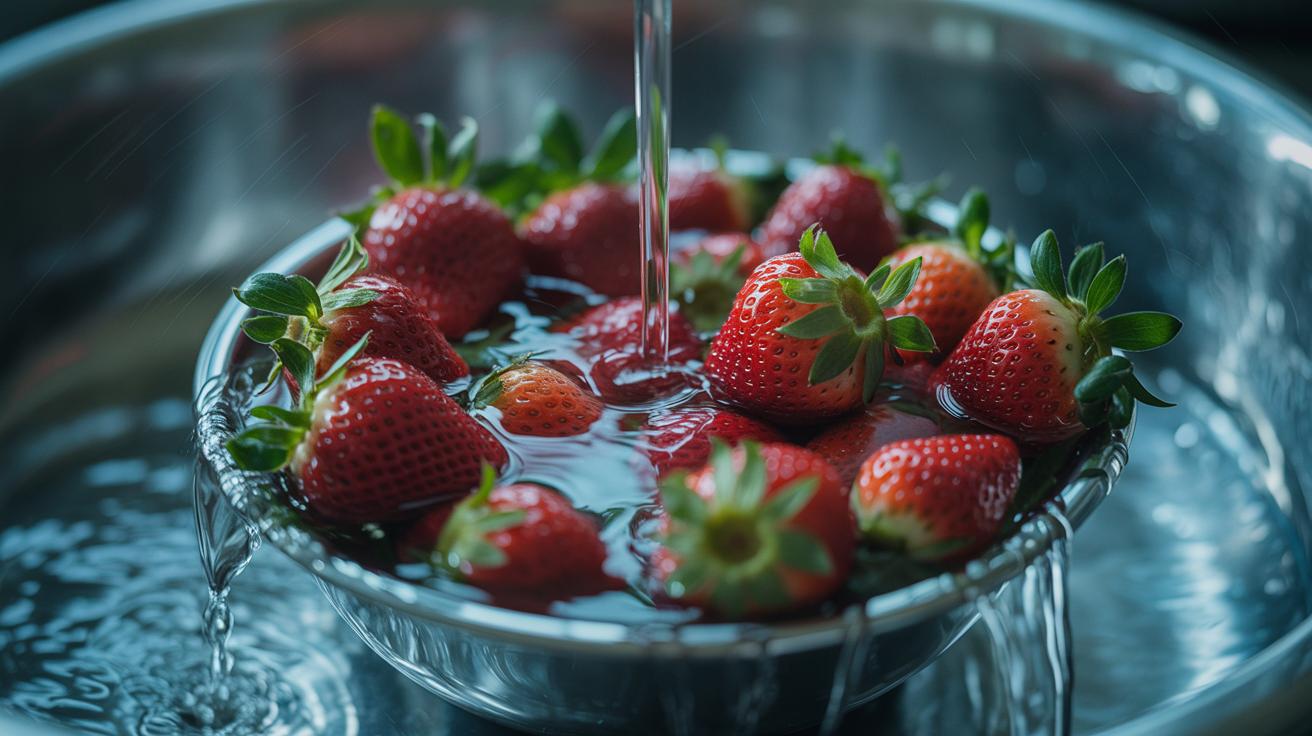
What You Need to Know
- 🍓 The lure of strawberries is undeniable, but their hidden pesticides necessitate going beyond basic rinsing to ensure their purity.
- 🔍 Discover the issue of pesticide residue on strawberries, which can pose long-term health risks if not properly addressed.
- 🧴 A vinegar soak is a straightforward method to remove chemicals and bacteria: Mix one part vinegar with three parts water and soak for five minutes.
- 🥄 Use a baking soda solution as a powerful detox tool by mixing one teaspoon of baking soda with two cups of water for an effective rinse.
- ⚗️ For the most thorough clean, combine both the vinegar and baking soda methods for a comprehensive detox strategy, ensuring your strawberries are free from harmful residues.
Eating fresh strawberries can feel like biting into a juicy piece of heaven. Yet, beneath their sweet façade, these delightful berries may harbor hidden pesticides and residues that a basic rinse cannot simply remove. The sheer joy of consuming strawberries should not be marred by the worry of invisible toxins. By going beyond basic rinsing, you can truly detox your strawberries, ensuring that each bite is as natural and pure as nature intended. Let us embark on a journey of understanding how to rid your beloved berries of these unwelcome visitors, making your meals healthier and your heart lighter.
The Pesticide Problem
While strawberries are delicious, they are also infamously known for being one of the most pesticide-laden crops. Strawberries are often vulnerable to pests; hence farmers use pesticides to protect them. Unfortunately, these chemicals linger on the fruit’s surface and can seep into the strawberry if not adequately addressed. Consuming these pesticides can have long-term health effects, ranging from allergies to more severe conditions. To love your strawberries is to understand their plight and develop ways to treat them right. Moving beyond basic rinsing involves knowledge and a willingness to protect yourself and your family from these hidden dangers.
Vinegar Soak: The Natural Cleanser
One of the most effective methods to detox strawberries is through a vinegar soak. Vinegar, an excellent natural cleanser, helps remove chemicals and bacteria while preserving the lush flavor of the fruit. To do this, mix one part vinegar with three parts water, and soak your strawberries for about five minutes. This mixture helps break down stubborn residues left by pesticides. After soaking, rinse them thoroughly to remove any vinegar taste. This method is not only straightforward but also significantly cuts down on the toxins you may unknowingly consume. With regular practice, a vinegar soak becomes less of a chore and more of a healthy habit.
Baking Soda Solution: An Age-Old Remedy
Baking soda, a staple in many kitchens, is more than just a baking ingredient. Its alkaline nature makes it a formidable opponent against acidic pesticides. To create a baking soda solution, mix one teaspoon of baking soda with two cups of water. Many find this process extra gratifying as it provides an environmentally friendly alternative to commercial cleaners. Gently swirl the strawberries in this solution for a few minutes, ensuring they are well coated. Rinse and enjoy the fruits of your labor, quite literally. This method may revive age-old practices but perfectly reflects present-day consciousness about what we consume.
Combination Cleaning: The Ultimate Detox Strategy
Sometimes, the best method is a combination of techniques. For those particularly meticulous about their detox process, alternating between vinegar and baking soda can offer the best of both worlds. First, use the vinegar soak to break down surface toxins. Then, follow up with the baking soda solution to neutralize any remaining residues. The dual-action approach increases the chances of eliminating pesticides and ensures that your strawberries are as clean as possible. It’s a bit of extra effort, but for those committed to purity, the combination cleaning method is unrivaled in its thoroughness.
- Use a vinegar soak: One part vinegar, three parts water, soak for five minutes.
- Try a baking soda rinse: One teaspoon of baking soda, two cups of water, swirl gently.
- Combine both methods: Vinegar soak followed by baking soda solution for thorough detox.
Store-Bought Solutions: When Time Is of the Essence
In our fast-paced lives, there are times when creating these home solutions may seem daunting. That’s where store-bought washes come in. They are convenient and generally effective, designed to break down the toughest of residues on fruits and vegetables. However, it’s crucial to choose products with ingredients that are naturally derived and environmentally friendly. While not the most economical or sustainable option, these are suitable alternatives for those short on time but still committed to clean eating. They offer peace of mind and a reminder that you are doing your best within manageable constraints.
In an era where awareness of what we eat is more important than ever, how do you choose to ensure your strawberries—and your family—remain safe from harmful chemicals? Are you prepared to take the step beyond basic rinsing and make detoxing an essential part of your routine?