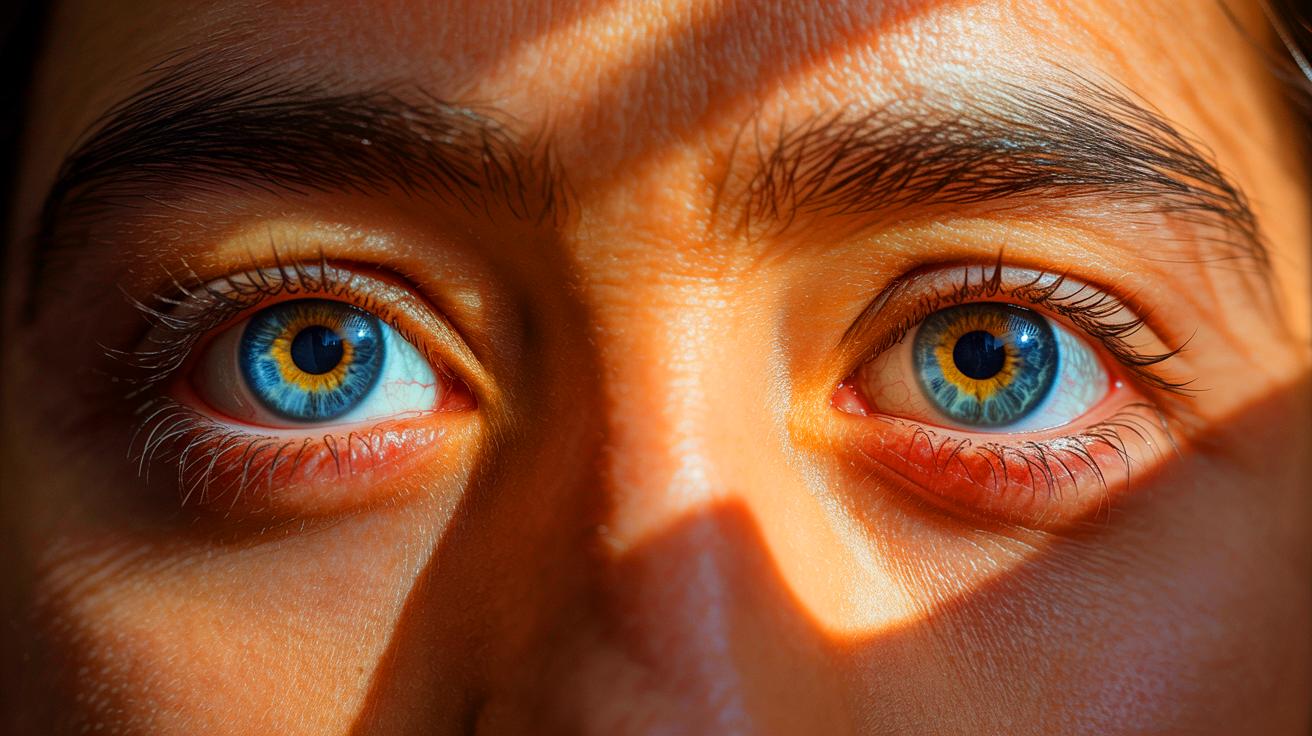
What You Need to Know
- 👁️ Pupil dilation reveals emotions and cognitive states by responding to stimuli like anxiety, attraction, or deep concentration.
- 😳 Our eyes can express emotions without words, with subtle pupil changes indicating feelings ranging from joy to anger.
- 🕵️♂️ Detecting deception can involve watching for eye behaviors, such as increased blinking or irregular movements, which might suggest dishonesty.
- 🔊 Pupil reactions to various environmental stimuli, including light and sounds, provide insight into internal processes even when unnoticed.
- ✨ The eyes act as a window, revealing more than spoken words, prompting deeper understanding in human interactions.
Windows to the soul, they say, are the eyes, and indeed, our eyes can reveal more than we may be comfortable admitting. Imagine sitting across someone whose pupils dilate, hands growing clammy, at a simple question—what secrets are they unwittingly revealing? As much as we’d like to believe we’re in control of our expressions, our eyes may have a story of their own. From emotions to intentions, exploring eye movements and pupil reactions opens a window into the subconscious mind. Unravel the enigma of human interaction where every glance can speak volumes without uttering a word.
The Science Behind Pupil Dilation
Pupil dilation often fascinates scientists and researchers in understanding human emotions and neurological functions. When your brain responds to a stimulus, your pupils react through processes governed by the nervous system. An anxious or frightened person may display sudden pupil dilation as their brain processes perceived threats. Moreover, attraction and love are known to cause one’s pupils to enlarge, unconsciously marking interest or excitement. These autonomic responses provide key insights into not only emotional states but also cognitive workload. When engaged deeply in thought or concentration, individuals can manifest slight pupil changes, hinting at their mental activities.
Emotions Written in Your Eyes
Our eyes are adept at communicating emotions without the need for words. A fleeting glance might reveal as much as a full conversation. Pupil size changes can be an indicator of arousal; however, it’s not just sexual attraction. Instead, it could range from anger to surprise or joy. Subtle shifts in pupil size allow trained observers to gauge someone’s emotional state. For example, during a disagreement, if your counterpart’s pupils contract, it might suggest heightened emotions or a defensive stance. Conversely, dilated pupils might signal openness or agreement. Clearly, a person’s emotional narrative can unfold right in front of our eyes, unbeknownst to them.
Detecting Deception Through Eyes
Lying often creates a unique stress level, manifesting visually through the eyes. Many people unknowingly believe they can mask untruths, yet physiological reactions say otherwise. A raised heart rate, perceived by slight pulsations or increased blinking, can signal deception. Involuntary eye behaviors aren’t just pseudoscience but are leveraged in law enforcement and psychology to assess honesty. Observers often look for irregularities in eye movement or unnatural blinking patterns as clues. So, if you’re reading this and wondering how much your eyes can give away, you’re likely not alone. It’s intriguing how much truth our eyes betray, despite our mouths saying otherwise.
Pupil Reactions to Different Stimuli
Our environments constantly affect our physiology, with pupil reactions being a prime demonstrator. Bright light triggers pupil constriction, a straightforward response. Yet, it’s the complex interplay of less obvious stimuli that reveals more. Encountering novel experiences or puzzles can cause subtle pupil fluctuations, signaling curiosity or intrigue. Pupils can also react to auditory stimuli, expanding with unfamiliar or unexpected sounds. Our autonomic nervous system essentially ensures an unwavering flow of information via our pupils, providing an insight into internal cognitive and emotional processes, even when consciously unnoticed.
- Anxious or frightened: Sudden dilation as a defense reaction.
- Interest or love: Enlargement indicates excitement or attraction.
- Mental focus: Slight changes when pondering deeply.
- Deception: Rapid eye movements or increased blinking.
- Environmental Changes: Adjusts size in varying light conditions.
Isn’t it remarkable how the simple act of looking into someone’s eyes can convey a depth of information far beyond spoken words? What secrets have your own eyes betrayed lately? As you ponder these intricate dynamics, consider how much control we truly possess over our visual cues. Does the awareness that eyes are such telltale organs change how you perceive human interactions? Could it lead to deeper understanding or confusion in communication? Let these questions guide you into the vivid world of unspoken dialogues. What will your journey into the world of seeing beyond the surface reveal?
Whoa, this is like spy-level intel! Can I train myself to read people’s pupils? 😏
Ok, this is kinda creepy. Are you saying we are all human polygraphs?!
Love this post! Absolutely fascinating to know how much our eyes reveal. Thanks! 😊
Why do our eyes betray us like this? I didn’t sign up for this! 🤔
Does pupil dilation vary with age or health conditions?
Honestly, this makes me more aware of my own eyes now. 😳
This info feels like magic! Can I make my pupils NOT react? Asking for a friend. 😉
Can you recommend any books or resources to learn more about this?
So, will wearing sunglasses hide these secret signals?
It seems helpful to know, but could this ever be misleading or misread?
Love the insights here. Our eyes really are the windows to our soul!
Anyone else trying to stare at themselves in the mirror now? 😂
Why do I feel my eyes are telling my secrets like a BBC documentary?
Seriously, who knew pupils could reveal so much? Mind blown! 💥
Can staring contests be considered a battle of secret revelations now?
Okay, but how do we prevent ourselves from involuntarily giving away stuff?
Are there any studies on cultural variations in pupil reactions?
This takes “look me in the eye and say that” to a new level! 😆
I’ll never think of someone’s gaze the same way again, thanks to you!
Do dilating pupils also indicate tiredness, or is that something else?
Anyone else feeling a bit self-conscious about their eye behavior now?
Is it the same for animals, like dogs or cats, do their eyes reveal secrets too?
So I guess poker face isn’t just about facial expressions anymore!
If someone’s pupils dilate in the dark, does it mean something extra?
Hey, can contact lenses affect how these signals are interpreted?
Does this mean Lasik surgery might somewhat alter pupil reactions?
Now I’m always gonna be second-guessing intense eye contact during conversations!
Can you train to become more aware of others’ pupil changes without being obvious?
Could pupil analysis be used in criminal investigations or trials?
I need to share this with my psychology major buddy, she’d love it!
OMG, this makes me realize a new level to Sherlock Holmes’ skills! 🕵
Amazing! Feels like I unlocked a cheat code to reading people! 🙌
Is there a tech that can help measure pupil changes for routine analysis?
How does pupil feedback differ when looking through different screens/monitors?
Does pupil reaction suggest outright dishonesty, or just possible deception?
Would love to see a follow-up post about practical ways to use this knowledge!
Can people with disabilities affecting communication rely more on this?
Anyone else using sunglasses more on tough conversation days? 😎
I wonder if artists use this knowledge to make their portraits more lifelike.
Is there a way to test how well one can read these signals?
LOL, our eyes really are snitches, aren’t they?
When your brain gives you away through your eyes… Classic human fail!
So if you maintain low eye contact, do you reveal less about yourself?
This would make for an awesome experimental psychology class!
Looks like eye contact rules are even more complex than we thought!
Would love an app that helps train reading pupil reactions; fantastic piece! 😊
Well, reading eyes is certainly a skill worth mastering, I guess!
So, beyond language barriers, eye pupils still tell universal stories? Amazing!
This feels like biohacking 101! How can I keep up and learn more?
I’m embarrassed thinking back on emotionally intense conversations, aha! 😬
Pupil size vs. staring contest, who wins the ultimate truth battle? 😅
Is this why eyes in portraits can feel so eerily lifelike?
Thanks for an informative post! Makes me rethink body language & non-verbal cues!
Ever thought about writing a full book on what our eyes can tell us?
Can varying exposure to light when speaking skew the signals?
A whole new meaning to “I can see through your eyes”! 😳
Anyone else immediately notice when others’ pupils change during talks?
So basically, my eyes are publicizing my internal monologue… cool, cool!
Fascinated by this subject, thanks! Where could I study more formally?
Honestly, the idea of hidden truths being spoken by my pupils is spooky! 👀
Learning about such subconscious processes is so captivating! Cheers! 😄
Do professional negotiators use these pupil cues to gain upper hand?
Ugh, being under light exposure might mess up my stealth signals. 😜
Reading people just became a whole lot more interesting! Gotta love psychology!
Can anxiety medication alter pupil signals, giving false positives?
So would different pupil reactions relate to personality types? Intriguing!
What a riveting topic, can’t wait to share this with my friends! 👏
Mind if I get pupillary intel from you? Seems you got the inside scoop!
Fascinating but now I’m wondering who’s secretly been reading my eyes! 😰
Perfect article to send some eyebrows raising during my next office break! 😎
Whoa! Our subconscious cues are practically shouting messages to everyone!
Brb. Reevaluating all past intense eye contact interactions. 🧐
This post gives a new perspective on establishing eye contact on dates! 😍
It’s fascinating, but also a bit intimidating to realize! Knowledge bomb! 🤯
This post just made me realize I MUST wear dark shades more often! 😂
So pupils are like built-in mood rings, but even better?! Awesome! 😊
I can finally understand why maintaining eye contact feels so powerful.
How about contacts? Do tinted lenses affect the perceived pupil size?
OMG, more reason to use that “my eyes are up here” line with better context! 🙄
Can this ability help in understanding attention during teaching or speeches?
Love this! So why don’t we train individuals in these observational skills more?
Have you ever considered organizing a workshop on this topic?
Are there cameras that can discreetly capture these involuntary reactions?
Does increased focus during a movie make everyone’s pupils dilate? 😜
Gonna analyze all movie villains’ pupil sizes now, thanks! 😆
It’s like our eyes are the true leaks of our secrets and inner selves!
This is fascinating but also kind of unsettling, haha!
Gotta admit, this just made me look at eyes with a new-found curiosity!
Definitely not something you want to think about during poker night! 😅
Crazy how our body communicates what we try to conceal! Nature is wild!
Wait, even fictional characters’ eyes might clue us into plot twists?! 😂
Is it possible to consciously control such pupil reactions if noticed early?
Does this mean characters in photo-realistic video games need eye detail updates?
Our eyes basically gossip when we try to keep our lips sealed… irony!
Need to start jotting down pupil changes in my future social interactions! 😝
Jokingly, does this mean there’s a market for ‘honesty goggles’ to cover it up?
Incredible insights shared here! Will keep watch on eyes now more than ever!
Honestly, eyes have caused me enough trouble without this knowhow! 😂
Honestly, our eyes being blabbermouths just adds to their charming allure! 😉
If eyes reveal that much, wonder about their role in love at first sight?
Ever since I read this, my own eyes feel like they know some juicy secrets!
Clearly our pupils didn’t get the memo on keeping secrets. Facepalm!
Hmmm, can emotions displayed by others’ pupils be used in mediations or therapy?
Kinda feel exposed knowing my windows to the soul might need privacy curtains!
Does staring at screens too long alter the way pupils revert to signals?
Do eyes of masked people during these COVID times tell us more secrets now? 😷
Loved this read! Would implementing this in daily life increase social intrigue?
Subtle but powerful glimpses into what we may feel… Our pupils are intense! 😯
If I got it right, poker games just got an unwelcome level up, right? 🙃
Can intense focus on someone trigger them to display subconscious cues unknowingly?
At least I know now why some folks seem like ‘open books’ at first glance!
Can music alter pupil reactions, hinting at listener’s emotional engagement?
Pupils are basically the tattletales of our souls, truth be told. 😌
Secret alerts from your eyes, thanks for making us more eye-aware! Great post!
Feels like embarking on an adventure, understanding humans one glance at a time!